Your three-year-old brings you the same picture book for the fourth night in a row. You've read it so many times you could recite it in your sleep. They point at the cover and "read" the title back to you — not because they're decoding the letters, but because they've memorized the words. You wonder: is this reading? Is this on track? Should I be doing something different?
Or maybe your four-year-old can sing the alphabet perfectly but still asks you what letter something is when they see it on a sign. Or they love being read to but can't seem to sit still for books without pictures. Or they mix up which sound "B" and "D" make, and you've heard that can be a sign of something, though you're not sure what.
Every parent of a young child has these moments. The quiet wondering. The scanning your child's behavior for signs of something — you're not sure what.
Here's what most parents don't know: there are specific, research-backed signals of reading development that show up years before kindergarten. Researchers have studied them for decades. Educators who work with struggling readers can spot them easily. But parents — the people best positioned to notice day-to-day changes — are rarely told what the signals are, when to start watching, or what to do if something seems off.
This article is about those signals.
Why most parents don't know what to watch for.
It's not because parents aren't paying attention. It's because no one has told them to.
Pediatricians check developmental milestones from the first weeks of life. Height, weight, motor skills, language production — parents get used to these being tracked because they happen at every well-visit. When your child starts walking late, someone notices. When they're not forming two-word sentences at a certain age, someone asks. The system is built around the idea that early awareness lets parents act early.
But reading is different.
Reading development happens in stages from roughly age three onward, and the earliest stages — the foundational skills that predict whether a child will read well — aren't tracked anywhere standard. Pediatricians aren't trained to assess literacy precursors. Preschool teachers, even excellent ones, aren't usually asked to catch subtle signs of reading difficulty at age three or four. Schools are built to respond once a child is visibly behind, which often isn't until first or second grade.
Which means parents, who see their child more than anyone, are in the best position to notice — if anyone would just tell them what to look for.
This article tells you.
What the research says.
Decades of research have converged on a clear answer to the question what predicts reading success in young children? Three frameworks in particular shape how specialists, educators, and researchers think about early reading:
- The National Early Literacy Panel (NELP), which in 2008 published a meta-analysis of over 300 studies on early literacy, identifying the specific skills that most reliably predict later reading outcomes.
- Scarborough's Reading Rope (2001), a visual model showing how reading draws on two interwoven strands — word recognition and language comprehension — that develop together over time.
- The Simple View of Reading (Gough & Tunmer, 1986), which establishes that reading comprehension is the product of two factors: decoding and language comprehension.
Across these frameworks, four early signals emerge as the most reliable predictors of reading development in children ages three to six. These are the skills Reading Compass tracks, and the ones I want to walk you through now.
Letters and the sounds they make.
This is probably the signal parents think about first — whether their child recognizes letters. But it's not just about naming letters. It's about two distinct skills that develop together:
- Letter recognition — knowing that this shape is called "B"
- Letter-sound knowledge — knowing that "B" makes the /b/ sound
Both matter. Children who know letter names early tend to pick up letter sounds more easily. And letter-sound knowledge is the foundation for decoding — the skill of sounding out unfamiliar words that kicks in later.
What this looks like across ages
Beyond recognition, researchers also look at how quickly children can name letters once they know them — a measure called letter-naming fluency. At ages 3 and 4, normative data for fluency is still limited, so Reading Compass reports this measure without assigning performance benchmarks at these ages. Instead, it establishes a baseline you can track as your child grows — a pattern that becomes more meaningful as they approach kindergarten.
Hearing the sounds in words.
Phonological awareness is the ability to hear and manipulate sounds in spoken language — separate from what letters look like. It's a purely auditory skill, and it's one of the strongest predictors of later reading success.
This signal develops in a predictable sequence. Parents notice it first through rhyming — whether their child can hear that cat and hat sound alike. Later, they might notice a child recognizing that words can be broken into parts — sun-shine, break-fast. Eventually, children become aware of individual sounds inside words — that sun starts with /s/.
What this looks like across ages
Words they know and use.
Reading comprehension depends on language comprehension. A child who doesn't know the word curious can recognize every letter in curious and still not understand the sentence it's in. That's why vocabulary — both the words a child understands (receptive vocabulary) and the words they use (expressive vocabulary) — is one of the most powerful predictors of later reading.
This is also the signal where home environment plays the biggest role. Children who hear more diverse language — stories, conversations, songs, explanations of the world — build richer vocabularies. And vocabulary gaps that start early tend to widen without intervention.
What this looks like across ages
Understanding stories they hear.
Before a child can read words on a page, they build the ability to understand spoken language at the level those words will eventually require. Listening comprehension is the direct precursor to reading comprehension — and it can be assessed years before a child reads independently.
Reading Compass measures listening comprehension across four domains that together capture how a child processes spoken language:
- Grammar — understanding sentence structure
- Sentence meaning — understanding what a sentence says literally
- Inference — understanding what a sentence implies beyond the literal words
- Vocabulary in context — understanding word meaning based on the surrounding language
What this looks like across ages
What to do if you notice a gap.
In twenty years of private practice teaching foundational reading skills to children with learning disabilities, I learned to pay attention to patterns, not isolated moments. Children develop at different paces, and not every child hits every milestone at every age. A 4-year-old who isn't recognizing letters yet isn't necessarily behind — they may just need more exposure. A 5-year-old who struggles to rhyme isn't automatically dyslexic.
But patterns matter. If you notice your child is consistently struggling with one or more of the four signals across several months, or falling noticeably behind their peers, that's worth paying closer attention to. Not panic — just attention.
The difficulty for most parents is figuring out which of the four signals matters most for their child, and how their child compares to what's developmentally expected at their age. That's where an early literacy check-in becomes useful — a way to see exactly where your child stands on each of the four signals, with specific guidance tied to their results.
Reading Compass is built for exactly this. It measures where your child is across each of the four signals, compares that to age-appropriate benchmarks, and gives you specific next steps — so you're not guessing, waiting, or wondering.
You're already doing the most important part.
If you've read this far, you're already ahead of most parents. Not because your child is gifted or because you've done something special, but because you're paying attention. You're watching. You're asking the right questions.
The research is clear. We know how reading develops. We know what to look for. We know what works. What's been missing — until now — is a way to put this knowledge directly into parents' hands, without the wait, the cost, or the anxiety of wondering whether you're seeing what you think you're seeing.
That's what Reading Compass was built for. And that's why I wrote this article.
Your child's reading development is happening right now — in the picture books at bedtime, in the signs they point at from the car seat, in the songs they sing in the bathtub, in the questions they ask about the world. You've been watching. Now you know what to watch for.
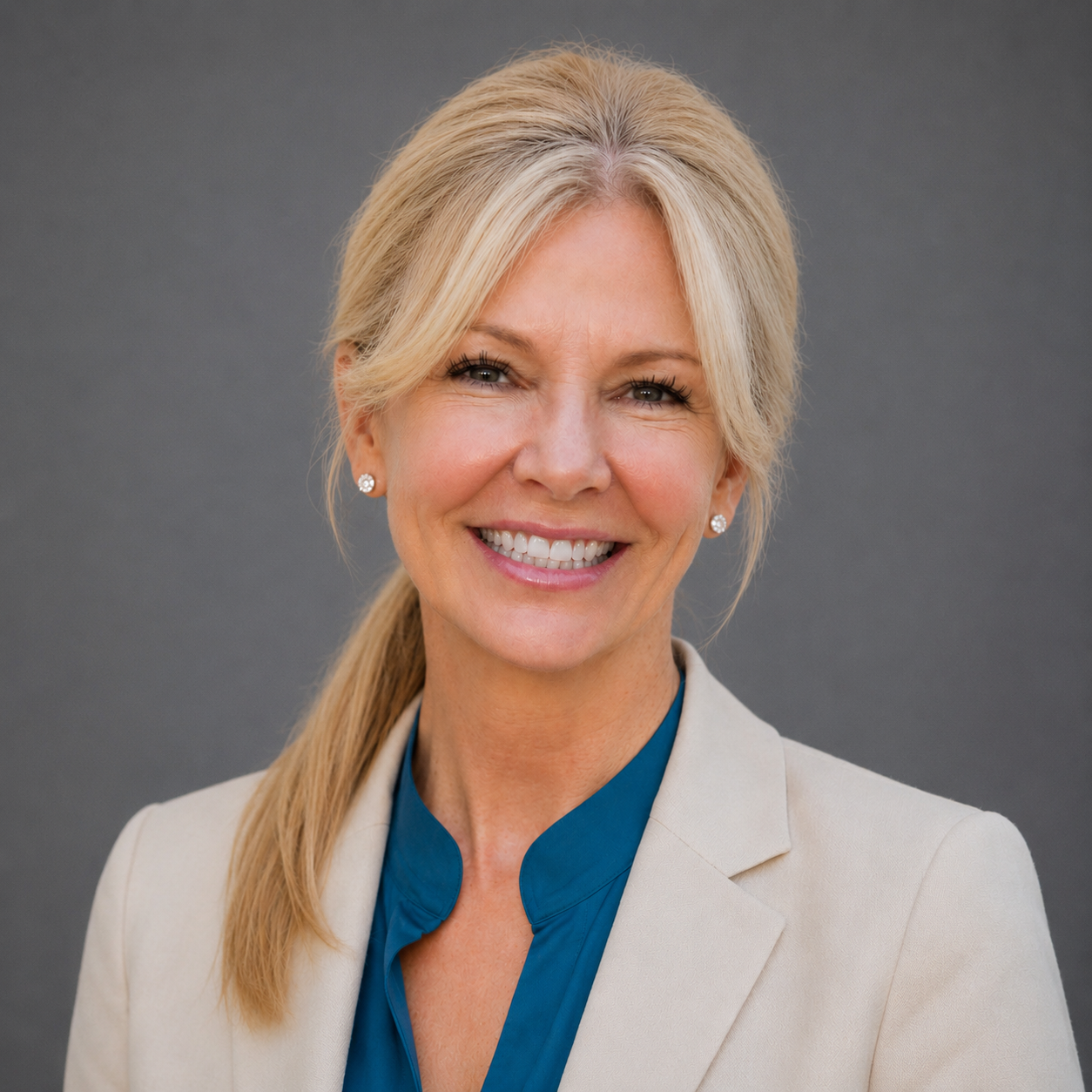
Julie Means Parker
Co-founder, Reading Compass · Licensed Dyslexia Therapist
Julie Means Parker is a Licensed Dyslexia Therapist, Certified Academic Language Therapist, and co-founder of Reading Compass — the early literacy check-in built for parents. For twenty years, she has taught foundational reading skills to children with learning disabilities through Orton-Gillingham-based instruction in her private practice. She also advocates for families navigating the education system, drawing on her experience with special education law. Her research on parents navigating special education has been published in peer-reviewed journals, practitioner magazines, and education leadership publications.